I spent 12 years building brands for international companies, founders, and influencers.
I designed.
I directed.
I built campaigns, identities, websites, decks, systems, and stories.
And somewhere in the middle of all that, I watched my own industry get disrupted in real time.
Not slowly. Quietly at first. Then very fast.
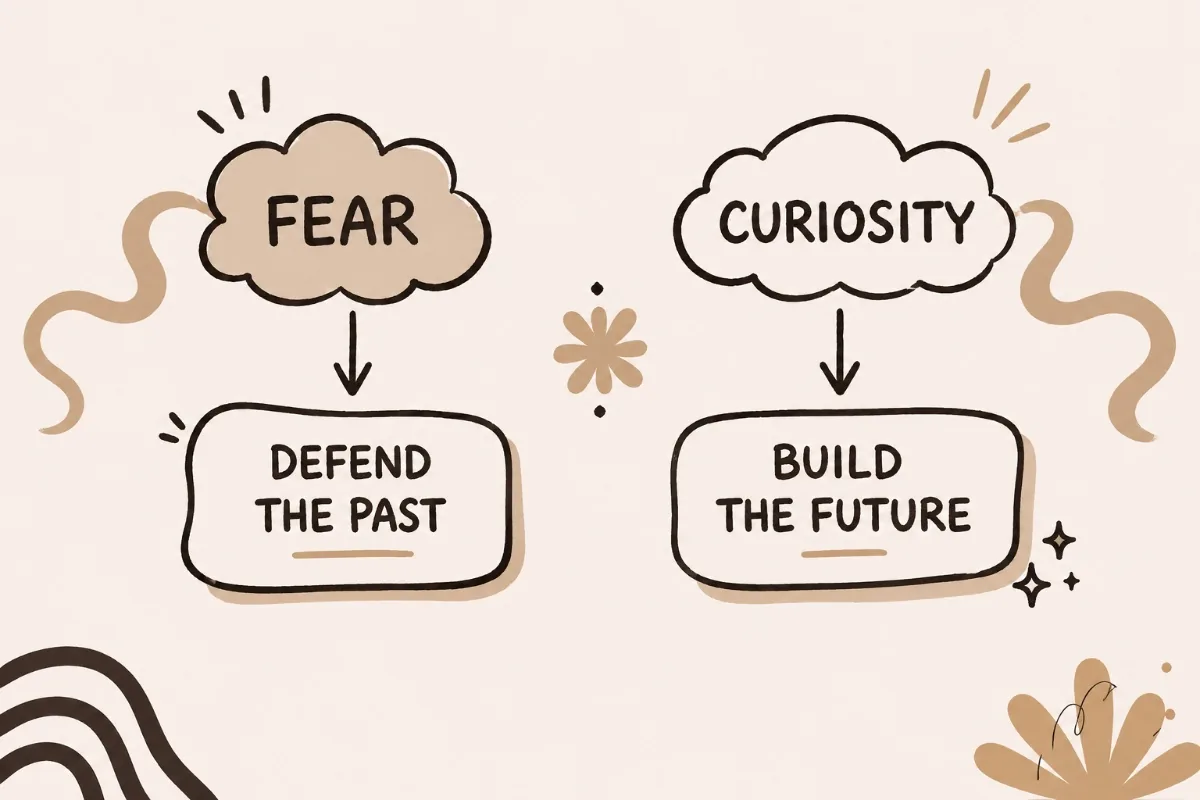
But I wasn't scared. I was curious.
Looking back, that curiosity is probably the reason I'm still excited about the future of creative work instead of defending the past.
The Moment Everything Shifted
Around 2022, I was recording a podcast called Chaos and Amazement with Clo Willaerts.
We were talking about technology, creativity, and disruption.
Then ChatGPT launched.
The timing almost felt scripted.
Testing it for the first time felt different from opening any other piece of software.
It didn't feel like a tool. It felt like a door.
For years, people in creative industries talked about disruption as a concept.
Suddenly it was sitting in front of us answering questions, writing ideas, challenging assumptions, collapsing the distance between thought and output.
I didn't think:
"This will replace me."
I thought:
"This will change the value of what I do, but we need to understand what it is"
That distinction matters more than most people realize.
What 12 Years in Branding Actually Taught Me
Branding is not about making things look good.
That's the part people see. It's not the full job.
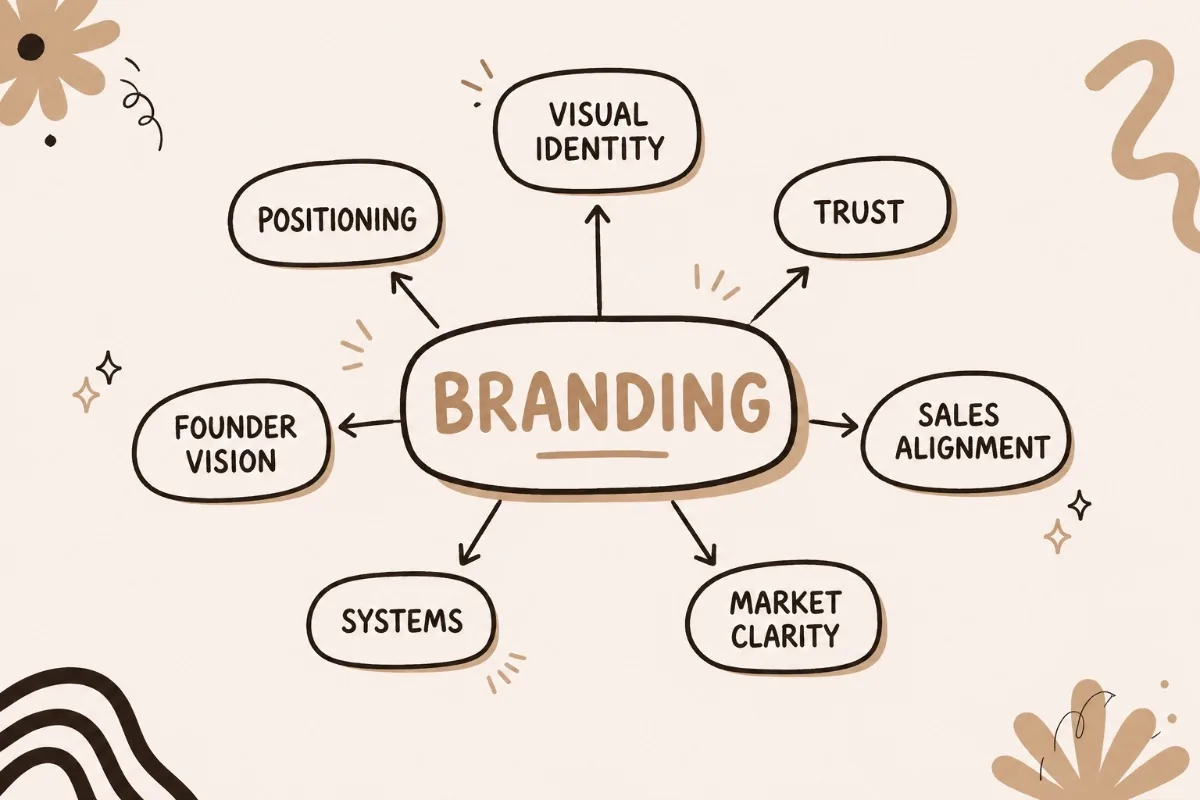
The real job is understanding why a company is stuck.
- Sometimes the visuals are wrong.
- Sometimes the offer is unclear.
- Sometimes sales and marketing aren't aligned.
- Sometimes the founder has a strong vision but no system to express it.
- Sometimes the product is good but the market doesn't understand why it matters.
<u>After 12 years, you start seeing patterns.text</u>
- You learn to read a room.
- You learn when a client is asking for a logo but actually needs positioning.
- You learn when a website problem is really a sales problem.
- You learn when a brand isn't failing because of design but because the business behind it is unclear.
That kind of judgment doesn't come from a prompt.
It comes from years of seeing what works, what fails, and why.
That's why AI didn't make my experience less valuable.
It made it more useful.
AI can generate output.
But it doesn't know what a company should become.
That still requires judgment.
How the Creative Skill Stack Changed
Before AI, a lot of creative work was limited by execution time.
A strategy could be clear, but building the deck took days.
A campaign idea could be strong, but creating variations took hours.
A website direction could be obvious, but writing, designing, and structuring everything took weeks.
Today I use Claude, ChatGPT, and many other tools every day.
Not as toys.
Not as shortcuts.
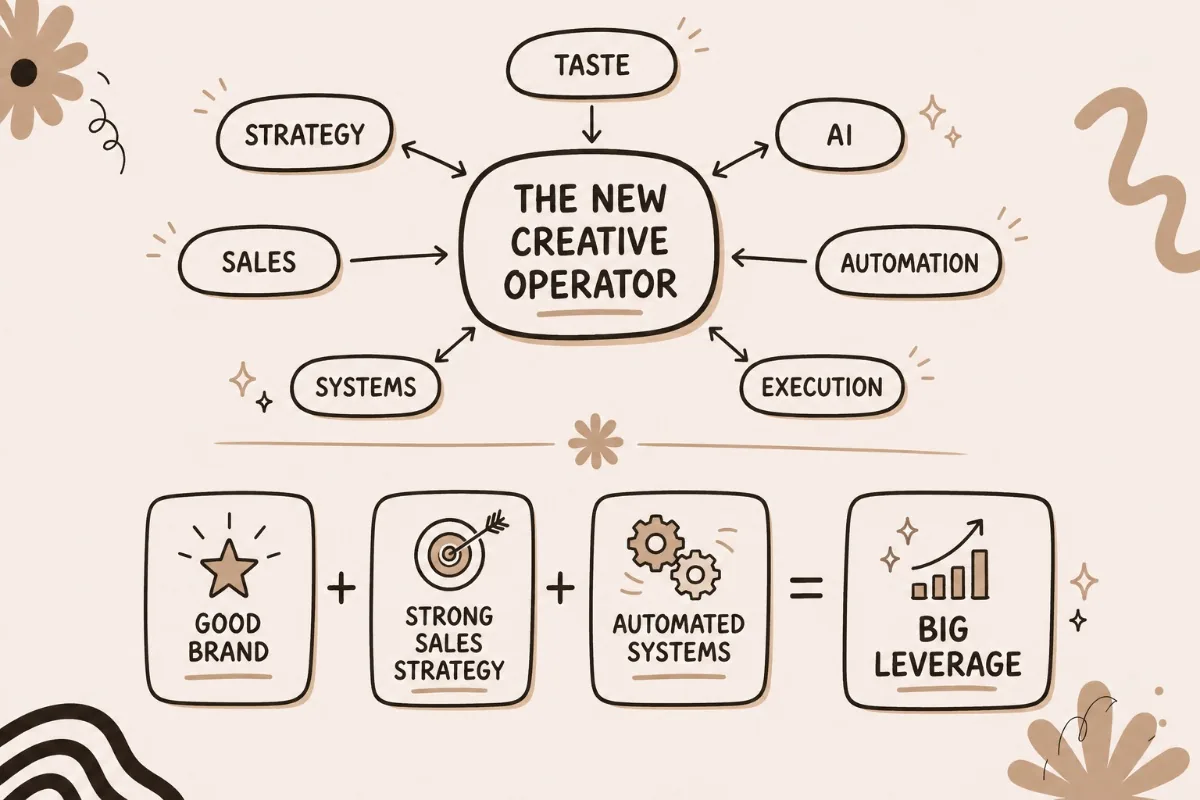
As part of my operating system.
I use them to think faster, structure better, test ideas, build workflows, write, compare, research, refine, and execute.
A deliverable that used to take two full days can now reach a strong first version in one morning.
Not because the standard is lower because the distance between idea and execution has collapsed.
The time doesn't disappear. It moves.
Less time on mechanical production.
More time on direction, taste, and decisions.
AI Doesn't Make You Better. It Amplifies How You Think
This is the part most people miss.
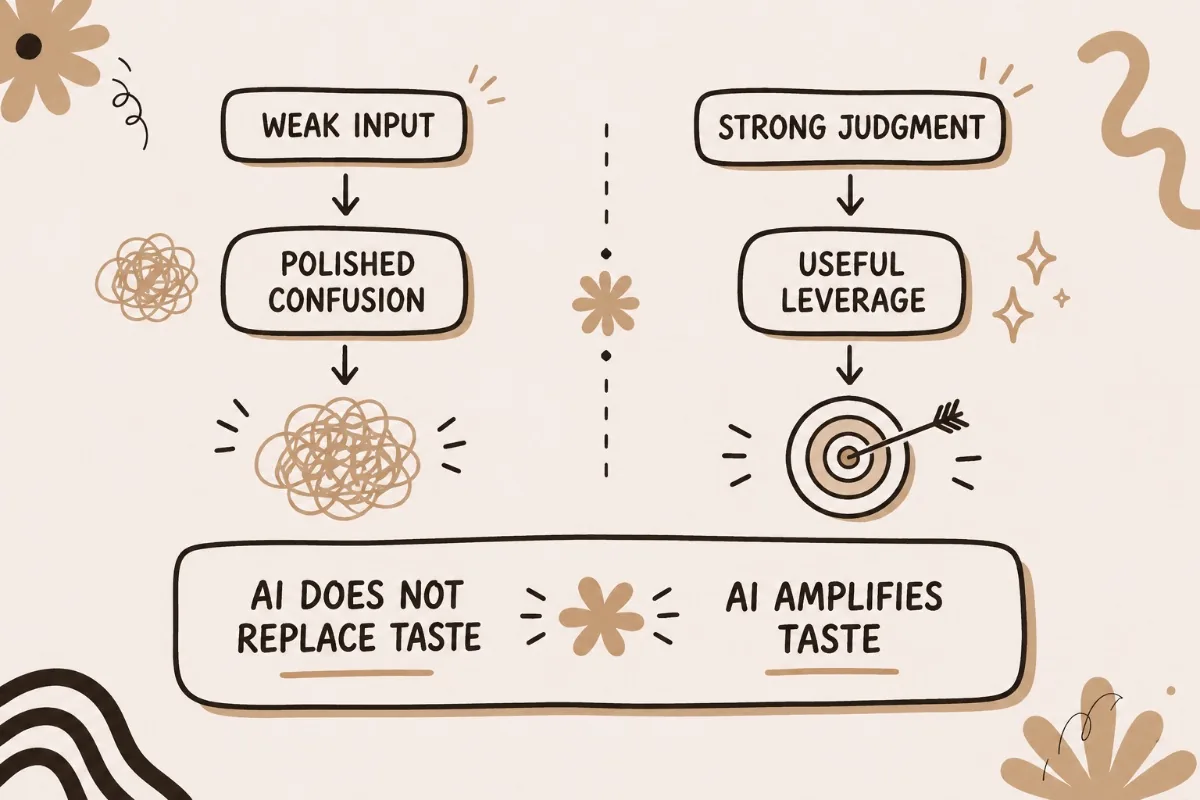
If your thinking is shallow, AI gives you faster shallow work.
If your positioning is weak, AI gives you more weak positioning.
If your briefing is unclear, the model gives you polished confusion.
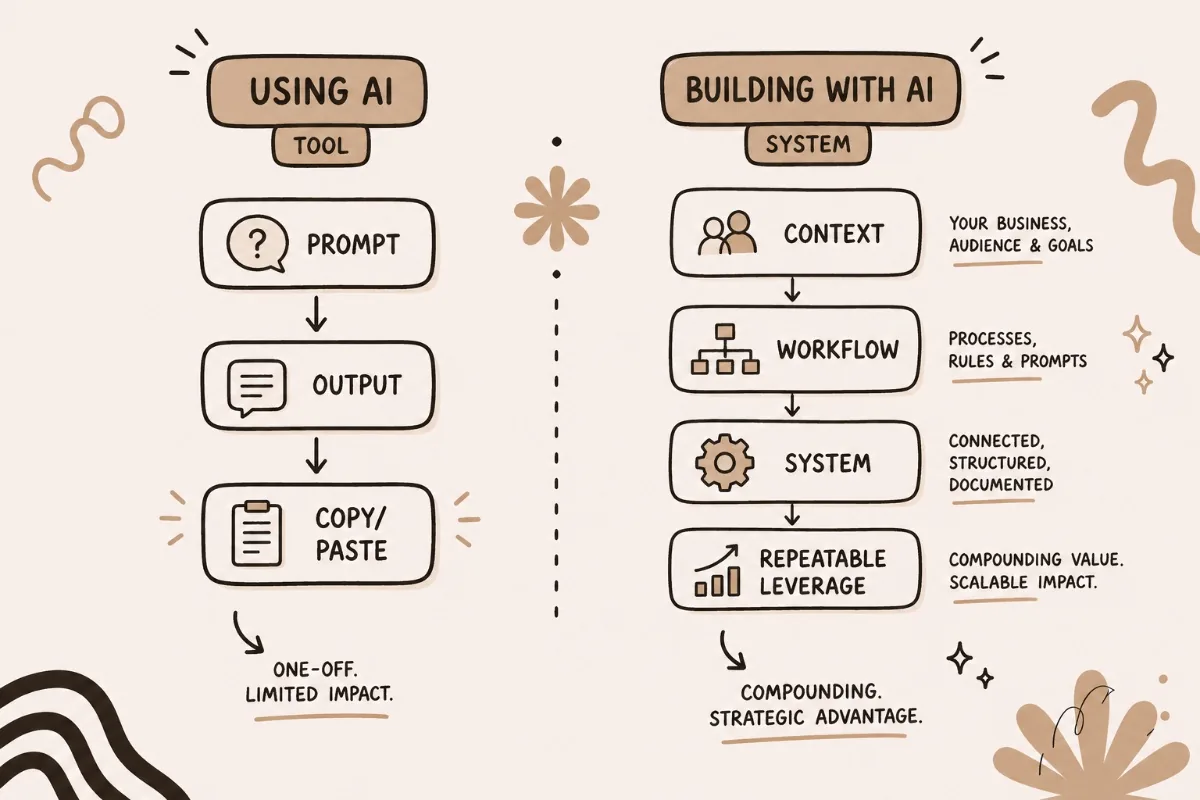
The real leverage isn't in typing prompts.
It's in knowing:
- What to ask
- What to reject
- What to improve
- What should never be automated
AI does not replace taste.
AI amplifies taste.
That's judgment.
And judgment comes from experience — not from the tool.
Why This Became My Next Move
I didn't stop being a brand strategist.
I expanded what that means.
Because companies don't just need better branding anymore.
They need systems.
They need:
- Clearer positioning
- Sharper offers
- Better workflows
- AI that fits their business
- Execution that doesn't depend on manual effort
That's where The Composer is moving.
Brand strategy is still the foundation. But now it connects to AI implementation, automation, content systems, workflow design, and execution.
Not AI for hype.
AI for companies that want to become faster, clearer, and scalable.
Belgium and Europe Are Still Early and That's the Window
In the US, AI competence is already a competitive advantage.
In Belgium and Europe, many businesses are still cautious.
That creates a window.
The companies that start now won't just use AI.
They'll operate differently.
Before competitors catch up.
The opportunity isn't replacing people.
It's building systems that make good people more effective
What a Creative Strategist Is Worth Now
For years, my value was helping companies turn ideas into brands.
Now it's helping them turn ideas into systems.
A brand without a system becomes noise.
A strategy without execution becomes a document.
AI without direction becomes clutter.
The future belongs to those who connect:
Brand + Sales + Systems = Leverage
When these work together:
- You're clear
- You're trusted
- You're consistent
- You scale without manual chaos
That's what AI changed for me.
It didn't replace the work. It revealed what the work really is:
Judgment. Taste. Direction. Systems. Execution.
About Phil Auryon
Phil Auryon is the founder of The Composer, an AI implementation and brand systems consultancy based in Belgium.
He helps founder-led SMEs and international companies turn strategy, creativity, and AI into practical systems for growth.
👉 Want to explore what AI could do inside your business?